

































Coral reefs are the "rainforests of the sea", supporting a third of all marine macroscopic species. However, their true diversity is microbial, that is, invisible to the naked eye. By analyzing 820 microbiome samples from 99 different reefs across the Pacific Ocean, collected during the Tara Pacific expedition, this work has mapped the microbial landscape of reef-building corals at an unprecedented scale.
The team, led by Sunagawa, Paoli, and Piel groups, including the HFSP-supported Long-Term Fellowship awardee Samuel Miravet-Verde, alongside the Tara Pacific consortium, reconstructed the genomes of 645 microbial species, finding that over 99% of them had never been genomically described. These microbes are not just transient passengers; they are highly specific residents of their coral hosts and act as prolific chemical engineers. The study revealed that these coral-associated bacteria contain a greater variety of biosynthetic gene clusters (BGCs), the blueprints for natural products, than has so far been documented in the entire global open ocean. To ensure these findings serve the broader scientific community, all genomic data have been compiled into the Reef Microbiomics Database (RMD) at https://rmd.microbiomics.io, a resource supported by HFSP.
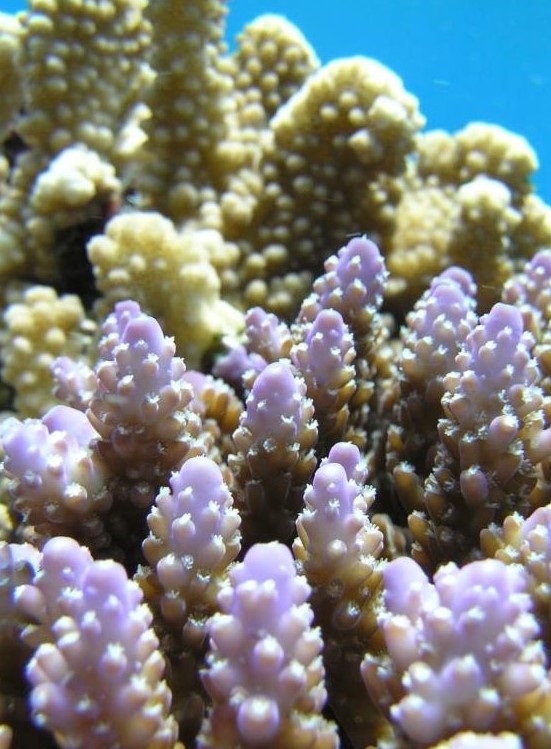
Copyright: Shini Sunagawa.
Building on these data, the authors leveraged synthetic biology to biochemically characterize select ribosomally synthesized and post-translationally modified peptide (RiPP) BGCs. This work represents the first biochemical characterization of RiPP modifications from Acidobacteriota, leading to the identification of a novel RiPP maturase enzyme family.
This discovery underscores immense, untapped potential for medicine and biotechnology, while highlighting a critical, often overlooked dimension of conservation: when coral reefs die, we do not just lose the corals, sponges, and fish; we lose a vast "molecular library" of microbial life. The findings emphasize that protecting reefs must include a microbial perspective to preserve the unique chemical diversity poised to enable future scientific breakthroughs.