


































The Human Frontier Science Program is built on the idea that major scientific breakthroughs often happen at the boundaries between disciplines. The HFSP Cross-Disciplinary Fellowships (CDF) embody this principle by supporting researchers who move beyond their original field of training to explore new areas of science.
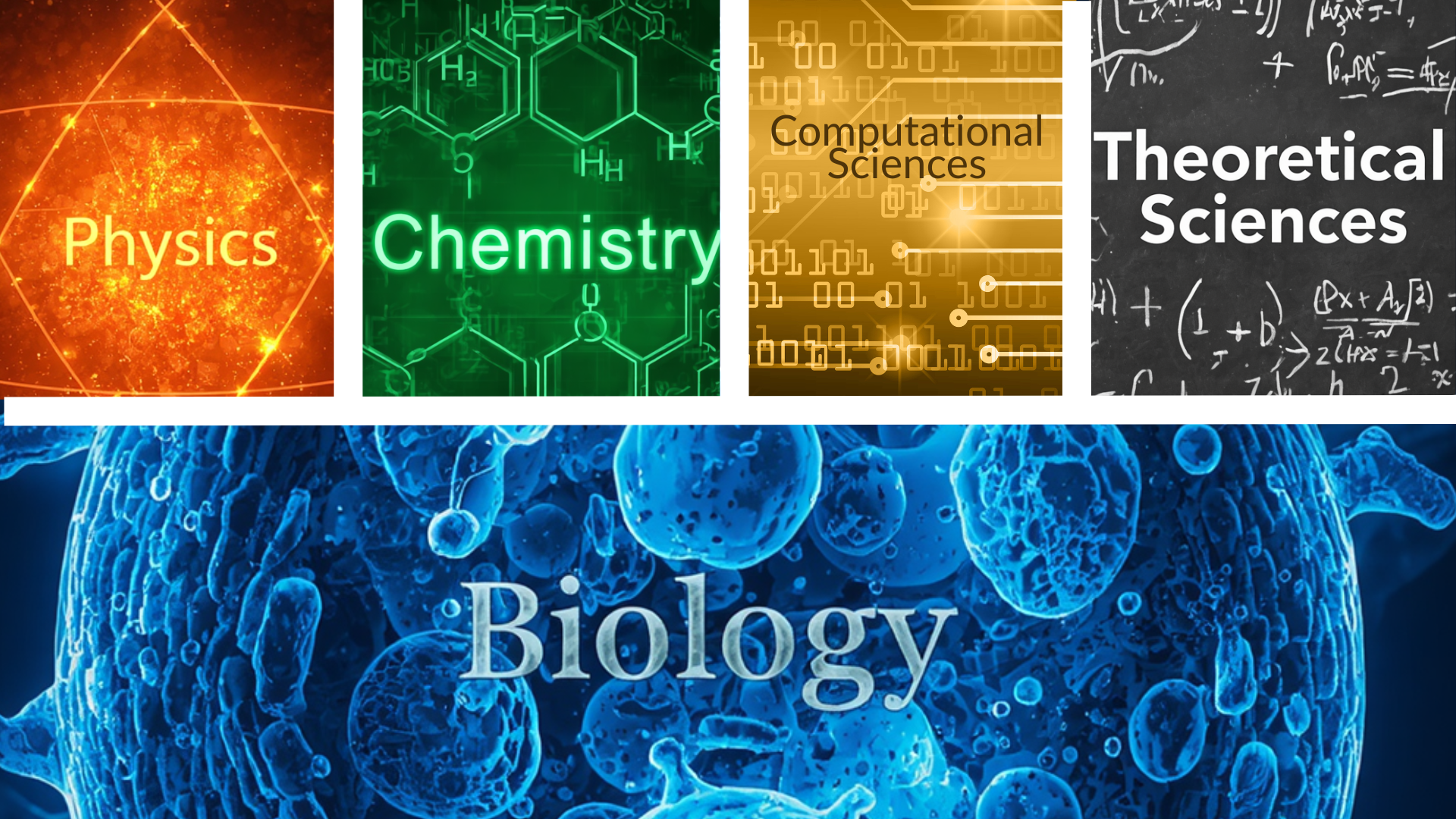
In 2026, four fellows were awarded Cross-Disciplinary Fellowships, each bringing perspectives from physics, chemistry, and computational and theoretical sciences into biology. Their work illustrates how approaches developed outside traditional biological training can open new paths for discovery.
One project applies concepts from nonlinear dynamics and computational modeling to understand how the brain builds and maintains internal maps of space. By combining theory with experimental neuroscience, the research aims to uncover how neural circuits balance stability and flexibility, principles that could also inspire new technologies.
Another project integrates engineering, mathematics, and synthetic biology to develop new ways of controlling gene expression over time. By designing systems that can precisely delay gene activation across generations of cells, the research provides new tools to study processes such as development, cancer, and adaptation.
A third project brings together physics, bioengineering, and machine learning to investigate how tissues take shape during development. Using light-controlled cells and predictive models, the work seeks to uncover the physical rules that govern how cellular forces generate complex biological forms.
Finally, a project at the interface of microbiology, physics, and data science explores how cells respond to sequences of environmental stresses. Combining microfluidics, imaging, and deep learning, the research aims to understand how cells “remember” past conditions and how this history shapes their fate.
Across these projects, what unites the fellows is not only the questions they ask, but the perspectives they bring. By moving across disciplines, they introduce new tools, new concepts, and new ways of approaching biological complexity.
The Cross-Disciplinary Fellowships highlight the value of scientific mobility, not only across borders, but across fields, strengthening the exchange of ideas that drives innovation in the life sciences.