


































Bats are natural hosts for a wide variety of viruses, some of which can spill over into humans and domestic animals, causing serious diseases. Coronaviruses are a particularly important group of bat-borne viruses and have been linked to notable human outbreaks, such as severe acute respiratory syndrome (caused by SARS-CoV-1) and Middle East respiratory syndrome (caused by MERS-CoV), and pandemics (e.g., COVID-19, caused by SARS-CoV-2). Understanding the diversity and circulation of these viruses in bats is therefore critical for predicting and mitigating potential zoonotic outbreaks. However, most research on bat coronaviruses has focused primarily on bats in Asia and Africa, leaving the highly diverse bat communities of the Neotropics largely understudied. This pilot study aimed to address this gap by investigating the presence and diversity of coronaviruses in bats in Belize, providing new insights into viral evolution in the Neotropics.
The HFSP Fellowship Awardee B. R. Ansil, University of Oklahoma, and team, analyzed archived samples from three species of leaf-nosed bats (family Phyllostomidae) in Belize: Desmodus rotundus (common vampire bat), Sturnira parvidens (little yellow-shouldered bat), and Carollia sowelli (Sowell's short-tailed bat). Molecular testing and phylogenetic analyses revealed the presence of coronaviruses in all three species, with infection prevalence ranging from approximately 22 to 36 percent. Scientists identified three distinct coronavirus lineages: one is novel and circulates locally across all three species, while the other two are closely related to human alphacoronaviruses (HCoV-229E and HCoV-NL63) responsible for respiratory infections. These results suggest that Neotropical bats harbor diverse coronaviruses, some of which share evolutionary links with viruses that infect humans.

These findings highlight the need to expand surveillance of bat-borne viruses beyond traditionally studied regions to better include the Neotropics. The detection of both novel and human-related coronaviruses in an initial sample suggests that the true diversity of bat coronaviruses in this region is likely far greater than currently recognized. While phylogenetic similarity with human coronaviruses was observed in shorter genome fragments, the pathogenic potential of these viruses has yet to be established. The ongoing work of the HFSP team aims to sequence the complete genomes of these viruses and assess receptor compatibility, as well as immune responses in both bat and human cells, to understand better host–virus interactions and the likelihood of cross-species transmission.
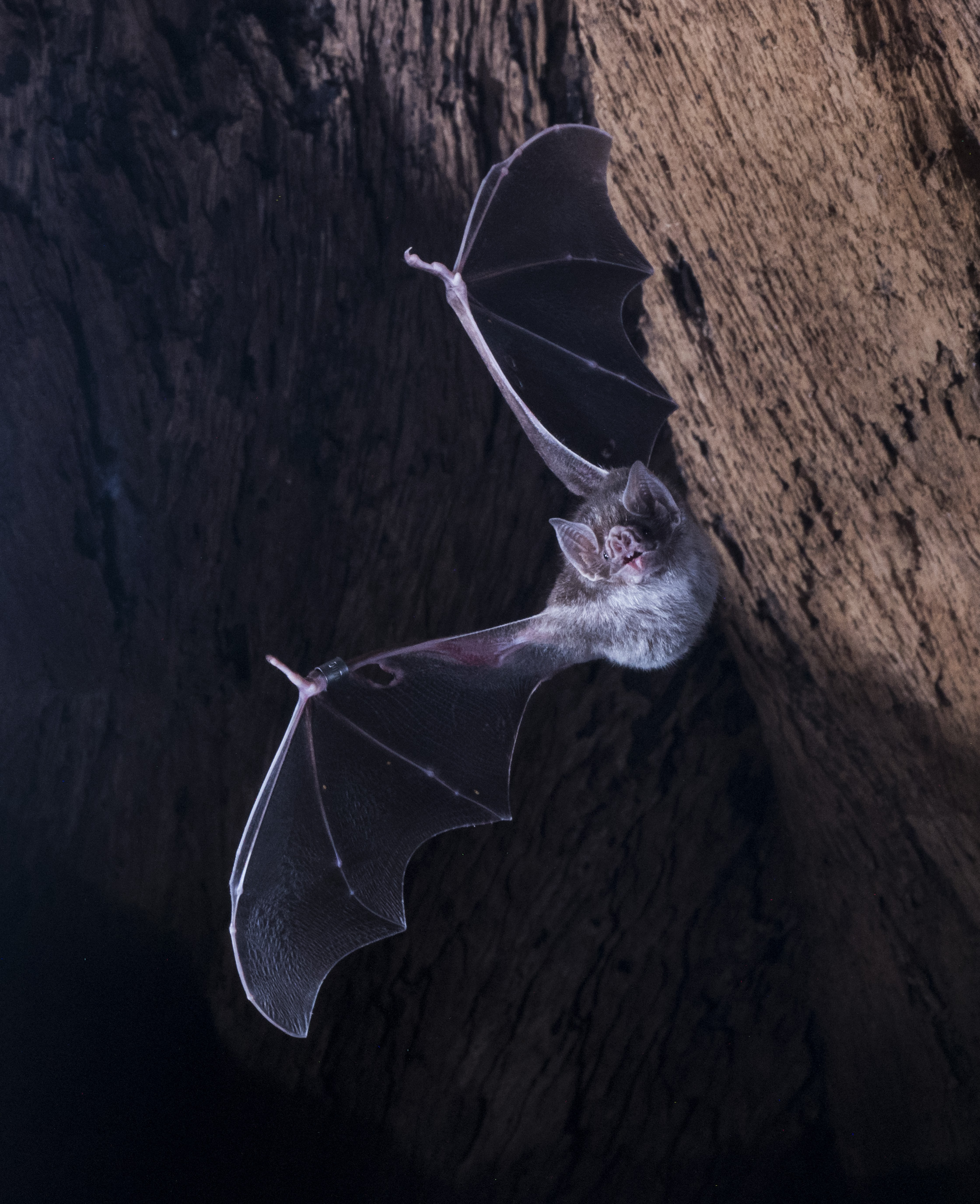
The HFSP Fellowship Awardee is studying how physiological stress influences coronavirus infections in Neotropical fruit bats. While beginning the process of preparing for fieldwork to collect new samples, he saw an opportunity to build on existing bat samples and data at the University of Oklahoma. These findings now serve as an essential launch point, laying the foundation for broader field investigations, in vitro experiments, and mathematical modeling.