


































Small mammals at high latitudes face tough constraints in the winter. They can migrate, but this is hard for tiny shrews. Some remain in place but reduce their energy consumption by hibernating, but this is not an option for shrews; they stay active and forage through the winter. Instead, shrews, along with fewer than half a dozen species, evolved the extraordinary capacity to shrink and then regrow: Dehnel’s phenomenon. By decreasing energy-intensive tissues, including in the brain, Dehnel’s phenomenon reduces energy demand, but how this is achieved was unknown.
This new study is the first to reveal gene expression and metabolic changes across the body. It follows the HFSP Research Grant team’s 2024 paper that linked this seasonal change in body size to changes in gene expression in the shrew brain. Led by William R. Thomas, Liliana M. Dávalos from Stony Brook University, and Angelique P. Corthals from John Jay College of Criminal Justice, the new data reveal how metabolic changes and regulatory pathways shift throughout the year to sustain the extraordinary capacity to shrink and then regrow, which is most extreme in the Eurasian common shrew.
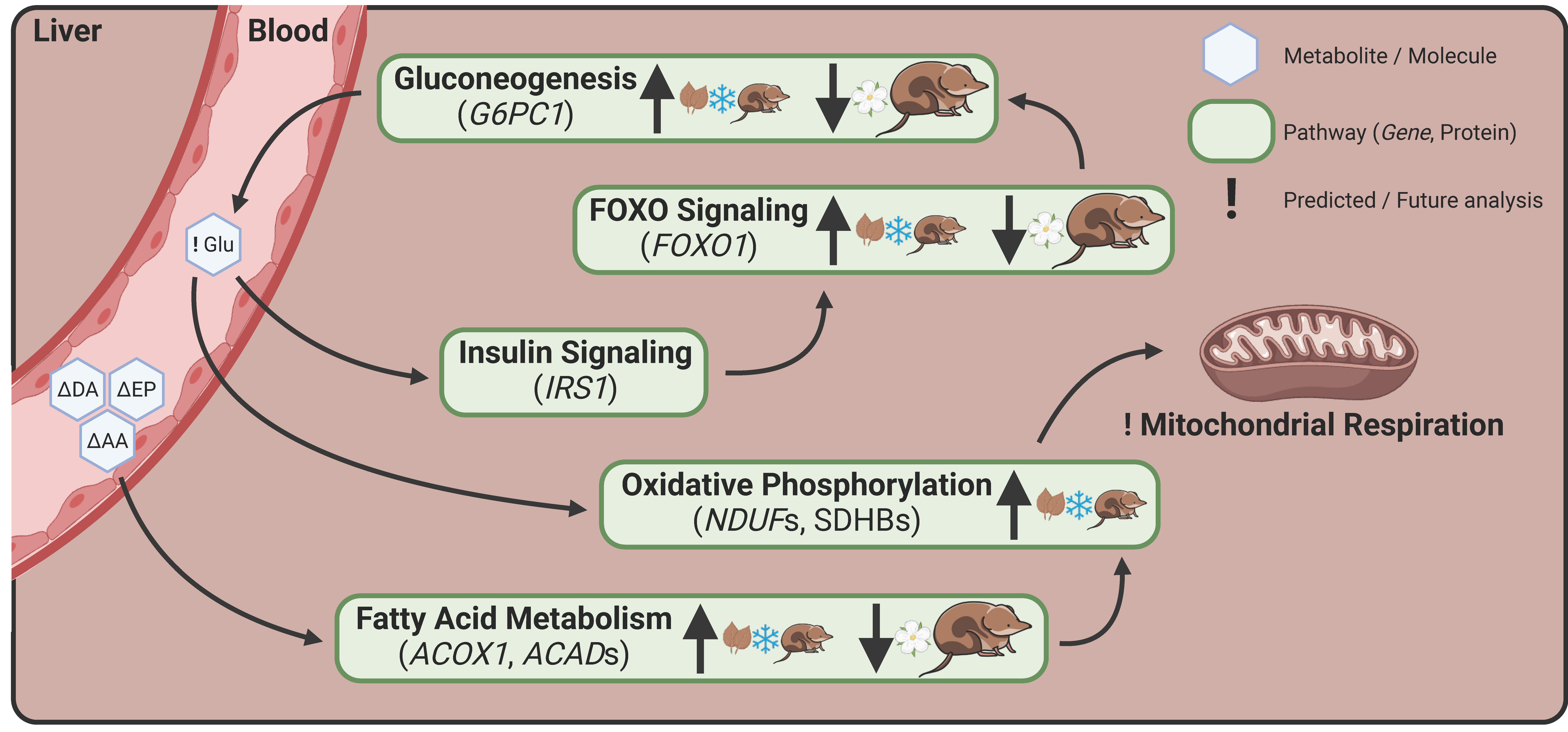
By analyzing metabolites, RNA transcripts, and proteins across seasons, the HFSP researchers uncovered molecular changes unlike those of hibernators. They found decreases in common polyunsaturated fatty acids, such as docosahexaenoic acid, during seasonal size change. Instead of conserving and gradually using fat like hibernators, shrews run on all cylinders by increasing fat consumption and sugar use during winter, rapidly burning through their fat stores and leaving less fat circulating in the blood. This is how these tiny mammals avoid starvation and remain active despite a reduced body size and frigid temperatures.
At the heart of these metabolic and size changes is FOXO signaling. In mice, flies, and humans, this biochemical pathway regulates energy use, size, and lifespan. Drops in FOXO signaling increase body size but decrease lifespan. The current study shows that in shrews, FOXO1 gene expression rises during autumn shrinkage and drops during spring regrowth, resulting in changes to size, metabolism and, the authors argue, shortened lifespans. Their findings indicate FOXO1 expression may coordinate the balance between energy efficiency, body size, and longevity.
The new findings make Dehnel’s phenomenon a natural model for studying metabolic changes, aging, and brain regeneration, with implications for understanding how energy regulation shapes longevity across all mammals, including humans.