


































This problem could be addressed only by taking a multidisciplinary approach, considering both the microorganism and its host physiology, and the physico-chemical properties of the environment, and by finding a way to coordinate and disentangle all these aspects. In 2021, Elizabeth New (University of Sydney, Australia), Marco Polin (Mediterranean Institute For Advanced Studies (IMEDEA), CSIC-University of the Balearic Islands, Spain), Daniel Segré (University of Boston, USA), and Irene Stefanini (University of Turin, Italy) joined forces through an HFSP Research Grant to unravel how yeasts mate inside social wasps.
Using custom-designed chemical probes, the team assessed chemico-physical features, such as pH, sugar and nitrogen levels, and viscosity, in the wasp’s two key digestive compartments: the crop (or “social stomach”) and the gut. They found that yeast cells encounter very different environments as they move through the intestine. Testing yeast cells and spores, the quiescent yeast status necessary for the first step in the process toward mating, under these conditions, revealed a clear pattern: while both survive in each compartment, spores germinate (leaving the quiescent status, second step toward mating) far more efficiently in the gut. Gene-expression analyses showed that yeast in the crop activates sporulation genes, whereas those in the gut activate fermentation pathways.
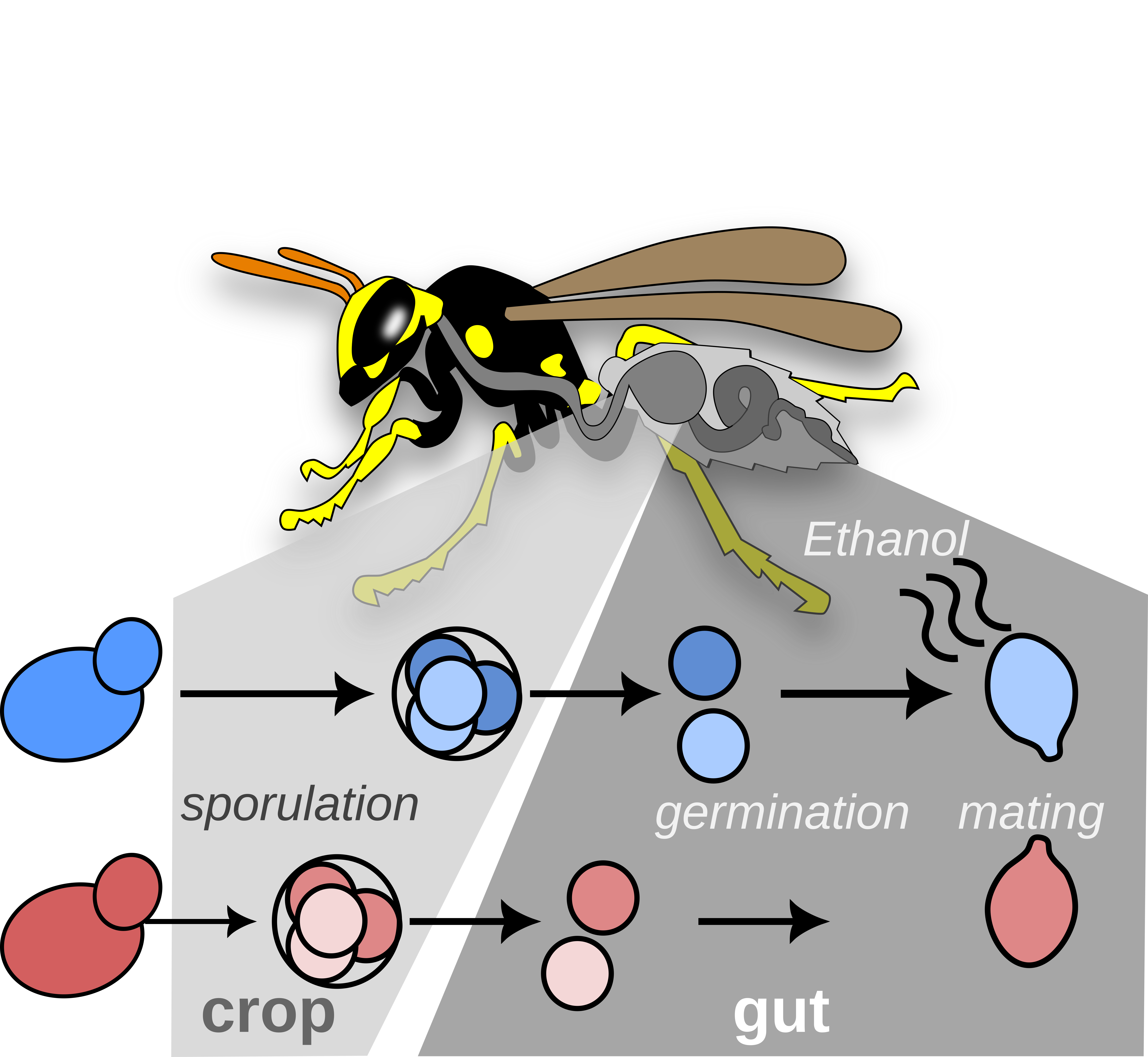
The HFSP team used a customized version of COMETS, a platform for simulating cellular metabolic dynamics in structured environments. By feeding the platform with these environmental measurements, it accurately predicted the metabolic shift—highlighting strong ethanol-producing fermentation in the gut, later confirmed through transcriptome sequencing.
Together, these results provide two milestones for understanding yeast ecology and its associations: yeasts sporulate in the crop, then rapidly germinate and ferment in the gut. This sequence clarifies the steps leading to yeast mating. Importantly, it reveals why the partnership between S. cerevisiae and social wasps may be so strong—social wasps are unusually tolerant to ethanol, the compound yeasts produce inside them.