

































Karl Deisseroth, the first recipient of the HFSP Nakasone Award, has been awarded the 2026 Nobel Prize in Physiology or Medicine, together with Peter Hegemann and Georg Nagel.
Deisseroth, Professor of Bioengineering and of Psychiatry and Behavioral Sciences at Stanford University, received the inaugural HFSP Nakasone Award in 2010 for his pioneering work on the development of optogenetic methods for studying the function of neuronal networks underlying behavior.
Optogenetics enables researchers to use light to activate or inhibit specific populations of genetically modified nerve cells. The approach opened new possibilities for investigating how particular neural circuits contribute to behavior and has since become an important neuroscience tool.
When HFSP recognized Deisseroth in 2010, the Nakasone Award had just been established to honor scientists who had made key breakthroughs at the forefront of the life sciences. He received the award and delivered the first Nakasone Lecture during the 10th HFSP Awardees Meeting in Kerala, India.
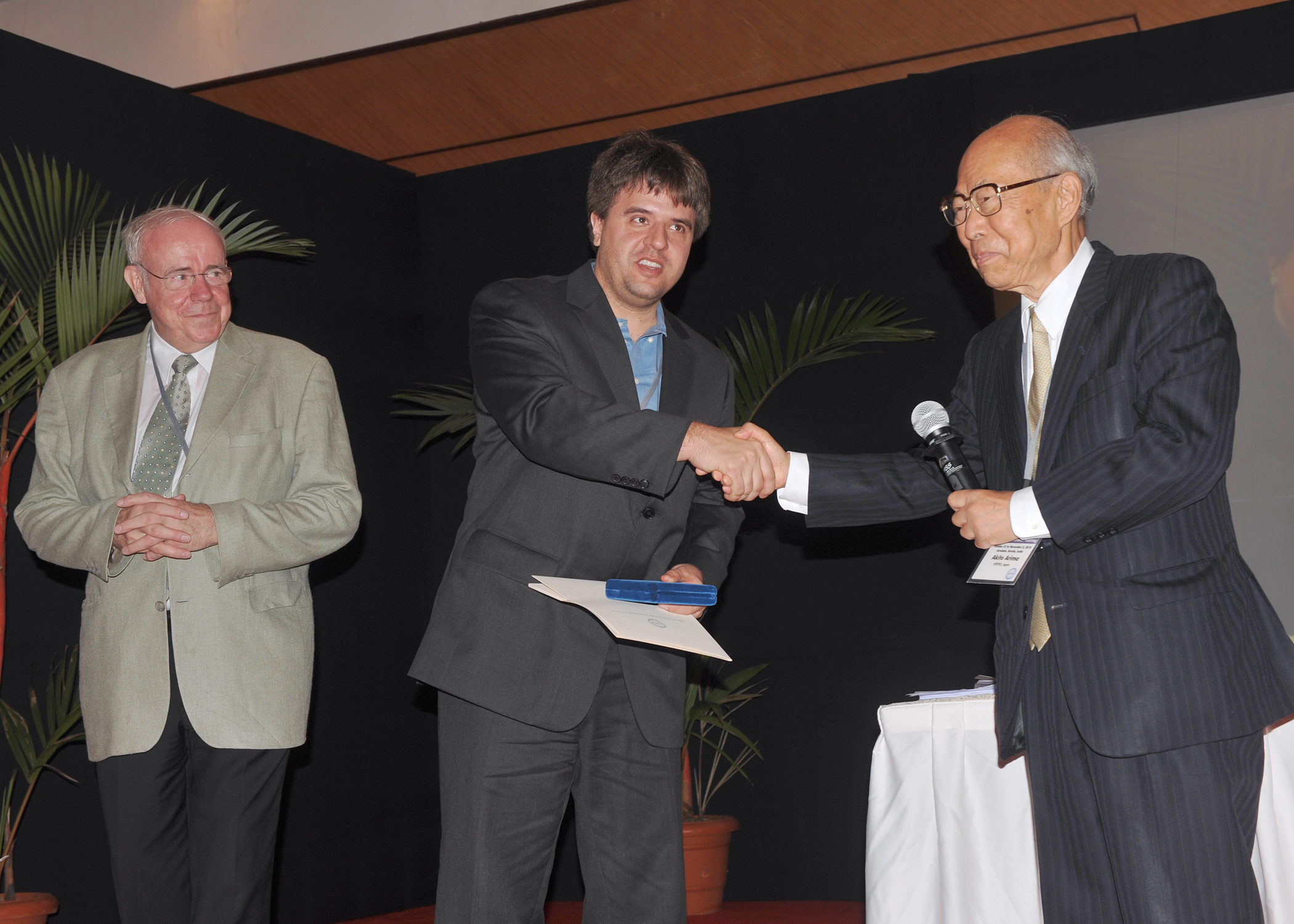
Sixteen years later, his Nobel Prize marks another milestone in a scientific career HFSP recognized early through an award created to celebrate transformative frontier research.
HFSPO congratulates Karl Deisseroth on this outstanding recognition of his scientific contributions.
With the 2026 Nobel Prize in Physiology or Medicine, five HFSP Nakasone Award winners and 31 HFSP awardees have now received a Nobel Prize, reflecting the remarkable scientific contributions of researchers supported and recognized by HFSP over more than three decades.