






























In 2007 the authors of the current papers received their first HFSP Young Investigator Award to form an intercontinental interdisciplinary team to understand the chemical basis of eggshell color and pattern mimicry in hosts of obligate brood parasitic birds, that lay their eggs in other bird species, including the infamous European Cuckoo (Fig. 1).
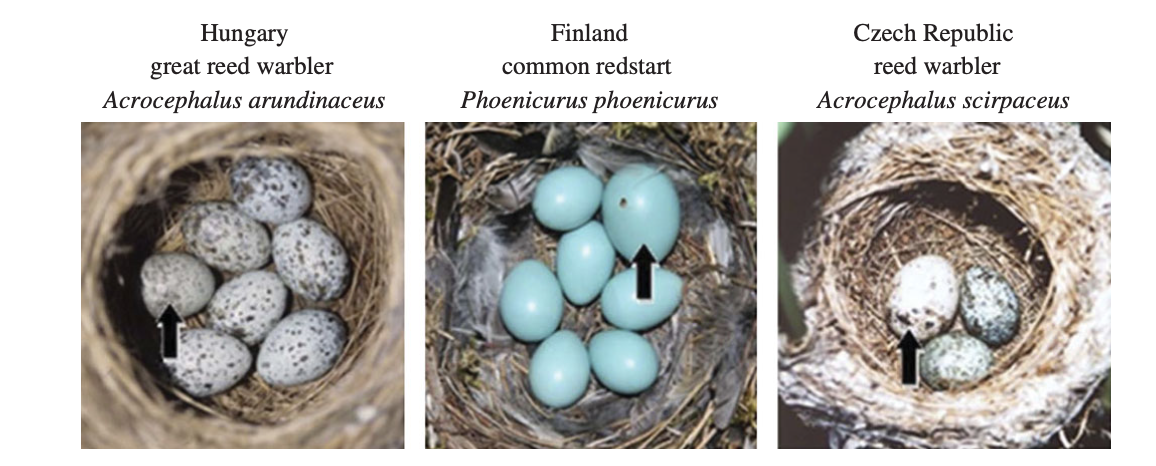
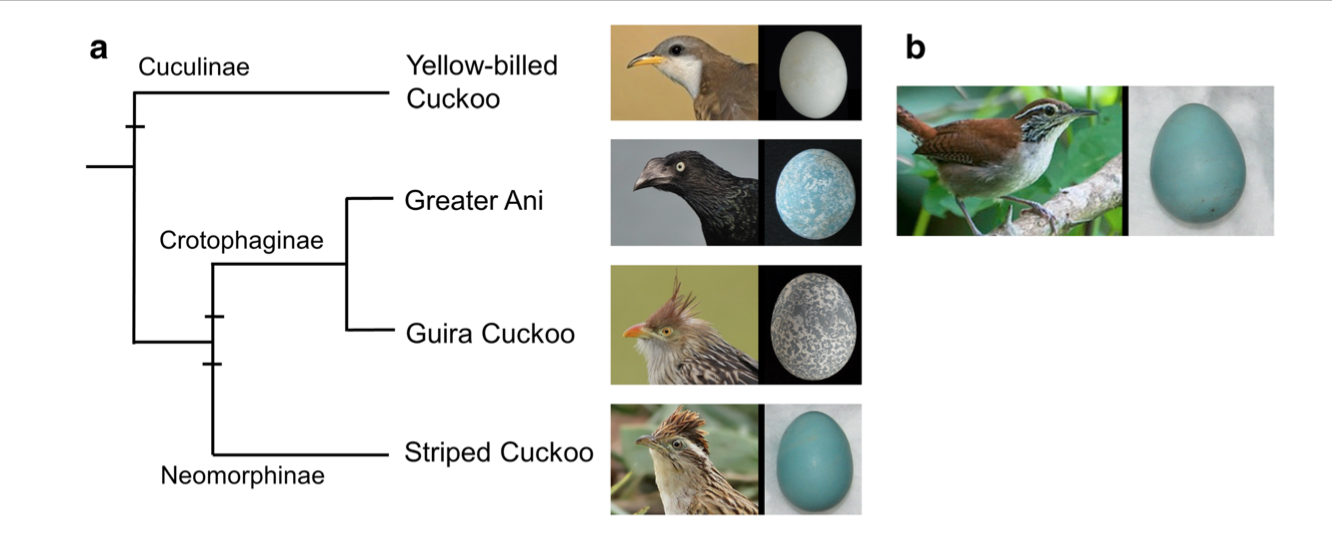
To renew their grant for one more round with the HFSP, the researchers published, just in time, the results of their first chemical comparative investigations in 2012 (Igic et al. Proceedings of the Royal Society of London B). These data revealed that mimetic cuckoo eggs contain both the type and level of concentration of pigments that the host eggshells themselves do. What an incredibly direct solution by nature for this perceptual conundrum! But, as it turns out, the mimicry of host egg colors has evolved several more times independently amongst cuckoos and cuckoo-finches, allowing the team to replicate their research in these lineages. And what they found and recently published in Biology Letters was different: the blue-mimetic Striped Cuckoo eggs in Central America do not contain the same pigment concentrations as their similarly blue host wren eggs (Fig. 2), especially relative to the also blue-egg laying non-parasitic cuckoos in the Americas.
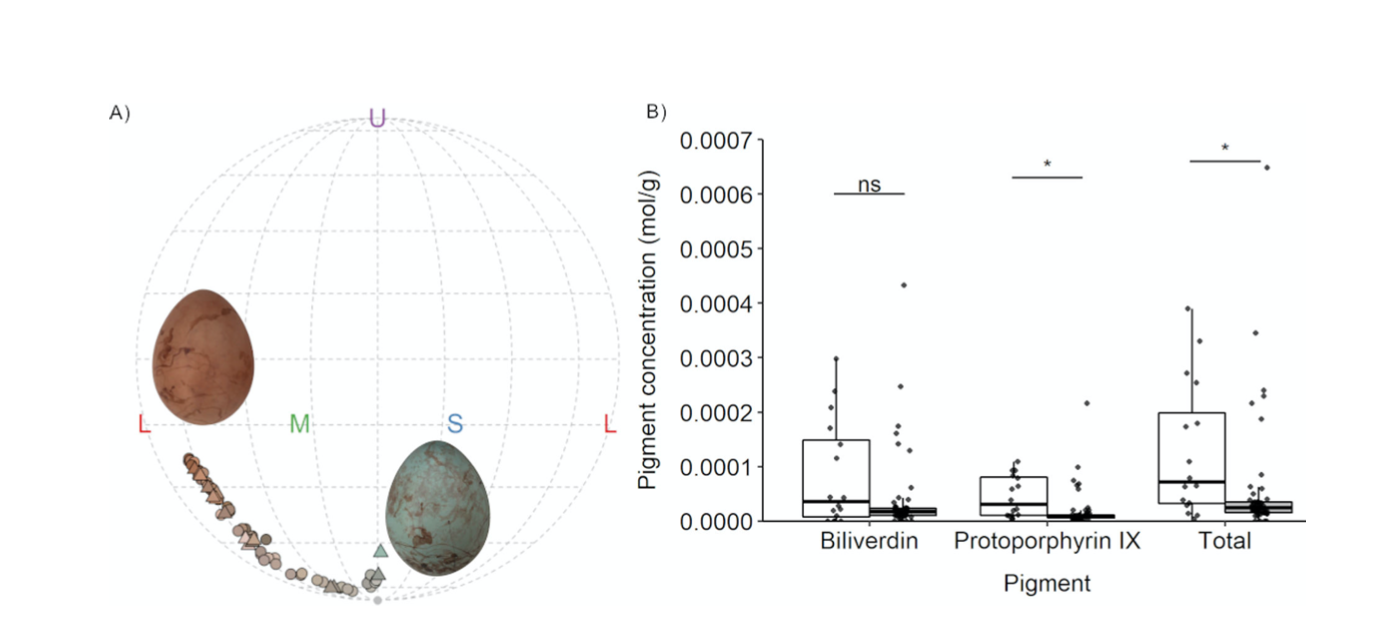
Finally, in Cuckoo Finches in Africa, mimicry is the result of partial chemical copying of the host Prinia's eggshell pigments (Fig. 3). So each different mimetic lineage came up with its own different solution for perceptual similarity of eggshells.
These worldwide results would not have been possible without the support of the HFSP program's generous travel support and collaborative spirit across continents, disciplines, and lineages.