


































Grasses cover much of the Earth's land surface and, through crops like wheat, rice, and maize, provide the majority of the calories that humans eat. A grass leaf is, in effect, a highly efficient solar panel: it captures sunlight and carbon dioxide and turns them into the sugars we eat and the oxygen we breathe. Despite the importance of grass leaves, scientists have long lacked a detailed, cell-by-cell picture of how a grass leaf actually forms, which genes switch on, in which cells, and in what order, as a leaf grows from a tiny cluster of stem cells into a mature, photosynthesizing blade.
In this study, the HFSP-supported researchers used a small model grass related to wheat and barley and captured the genetic activity of nearly 70,000 individual cells sampled across the full length of a developing leaf, from its stem cells at the base to its oldest, fully mature cells at the tip. This allowed them to reconstruct, in unprecedented detail, the sequence of genetic decisions that give rise to the many specialized cell types found in a grass leaf.
A central part of this work focused on the small pores on the leaf surface, called stomata, that plants open and close to breathe in carbon dioxide while limiting water loss. Building these pores requires a precise sequence of cell divisions and identity changes, guided by a small set of master genetic switches. Two of these switches, known as MUTE and FAMA, are active at the same time and in the same cell as it prepares to divide. So, how can two signals present together control different outcomes? By mapping the genes each switch controls, the team found that, despite being expressed together, MUTE and FAMA largely control separate sets of downstream genes. In other words, the two genetic signals act differently in the same cell, allowing it to execute a division and a subsequent identity change, respectively.
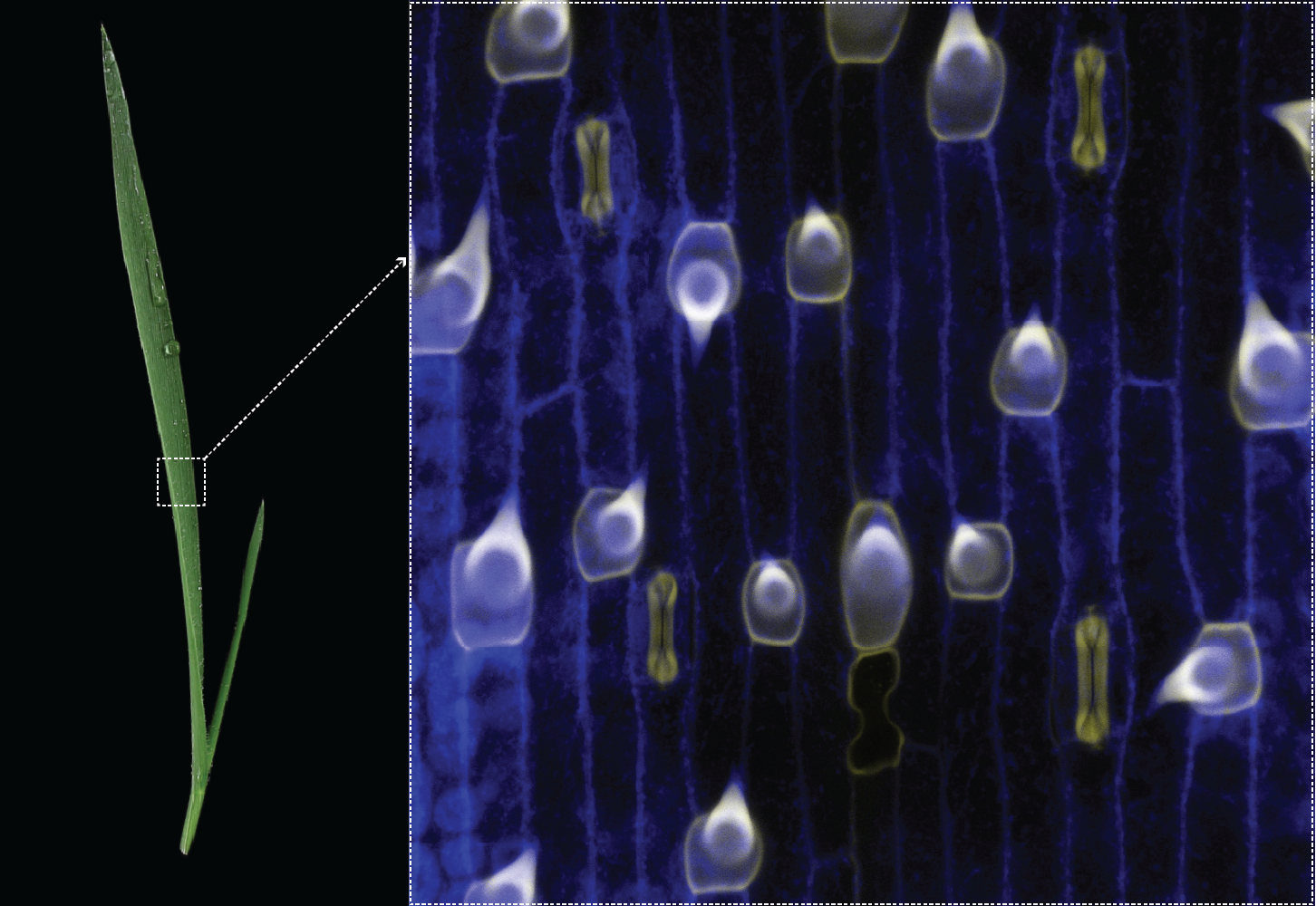
A key step in this project was confirming that the clusters the scientists identified computationally were genuine and corresponded to actual cell types in the grass leaf. HFSP funding specifically enabled them to generate new transgenic reporter lines in grasses for the enigmatic stomatal helper or subsidiary cells. Using these marker lines together with an in situ technique that visually lights up specifically expressed genes (=mRNA) directly inside intact leaf tissue, the team members were able to verify that many of the cell groups identified in their data corresponded to real, distinct cell types in the leaf.
Beyond resolving a specific puzzle in stomatal development, this study provides the broader scientific community with a detailed, validated map of gene activity across a developing grass leaf. This is a resource that other researchers can use to study leaf development, photosynthesis, and stress responses in crops. Given how central grass leaves are to global food production, understanding the genetic rules that build them is a foundational step toward improving crop resilience and productivity in the future."