


































Shrews are tiny mammals that burn energy at an exceptional rate and carry a heavy burden of gut worms and blood parasites. Most mammals rely on the thymus and bone marrow as their main factories for immune cells, but some shrews have an enlarged, kidney-sized immune organ in their abdomen called the pancreas of Aselli. Until now, we did not know what this organ regulates at the molecular level or how it relates to the shrew’s unusually fast-paced life.
The scientists quantified gene activity (mRNA) from the pancreas of Aselli in Eurasian common shrews and compared these patterns to those in the spleen, the immune organ shared by all mammals. They also compared this enlarged shrew organ to a special immune organ found only in young birds, the bursa of Fabricius, which helps them build up their antibody-producing cells. By combining new shrew data with publicly available chicken data, the team was able to place this unusual mammalian organ into its evolutionary context.
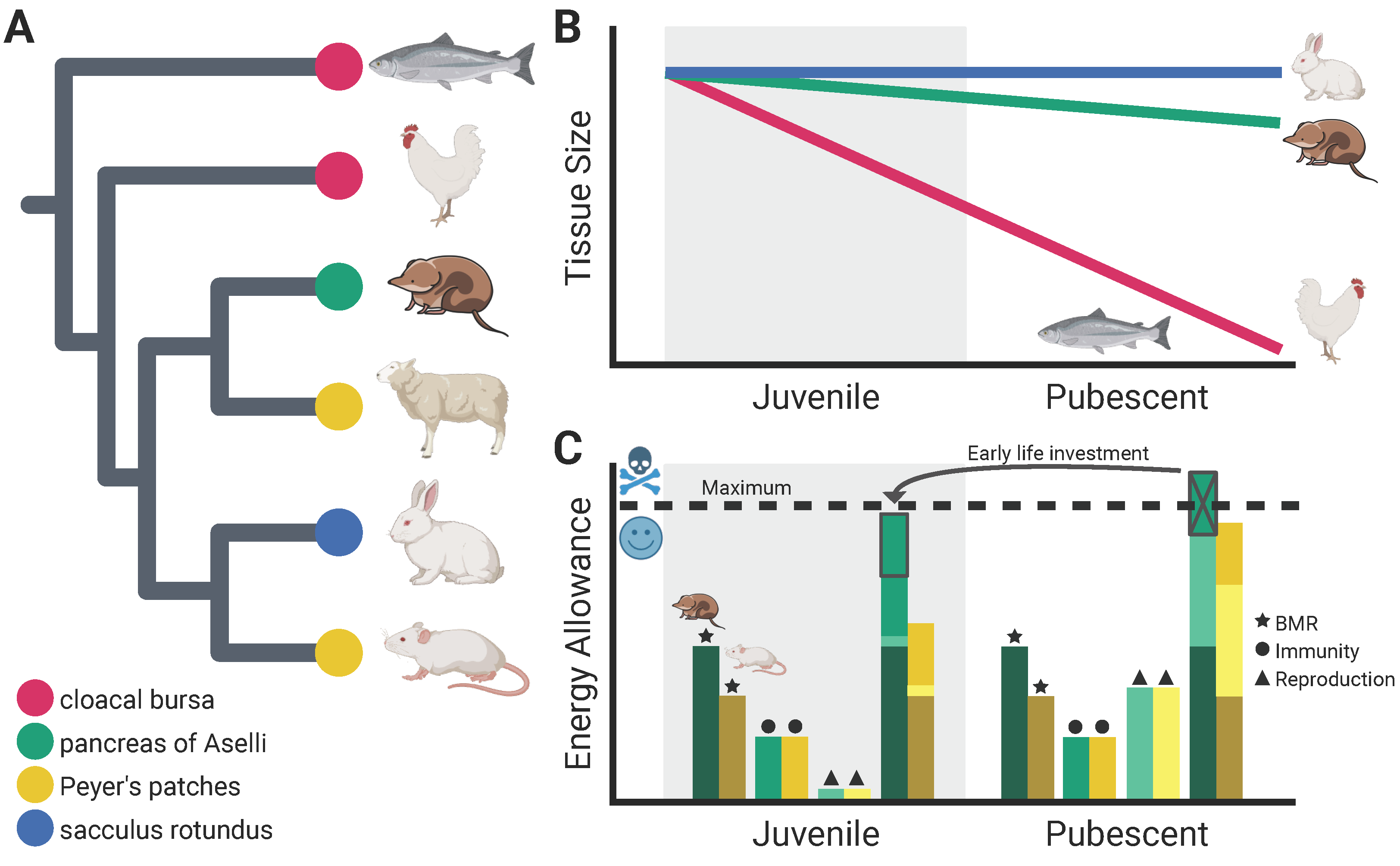
They found that the shrew’s pancreas of Aselli is strongly geared towards producing long-lived plasma cells, the cells that secrete antibodies and provide lasting protection after an infection. Thousands of genes differed in activity between the pancreas of Aselli and the spleen. Many of the most active genes Aselli are known to push B cells toward becoming plasma cells. When the researchers compared the shrew organ to the chicken bursa, they were not equivalent. While the shrew pancreas of Aselli is more focused on differentiating mature antibody-producing cells, the chicken bursa of Fabricius shows stronger signals of regulating early, naïve B cells. Despite these differences, both organs share key gene switches that drive adaptive immunity, suggesting they have independently evolved some similar molecular solutions to boost long-term defenses against foreign invaders.
The pancreas of Aselli, previously an anatomical curiosity, is a key adaptive immune organ that likely helps shrews survive their many parasites despite their high energy demands. The current work reveals how extreme lifestyles can drive the evolution of new immune structures and strategies, offering fresh insight into how mammals balance energy use, infection risk, and reproduction over very short lifespans."