






























Nobel laureate Ada Yonath, a longtime member of the HFSP community, pursued one of biology’s most daunting problems with extraordinary persistence—and embodied the kind of bold, curiosity-driven science HFSP was created to support.
Professor Ada Yonath, the pioneering structural biologist whose determination to reveal the workings of the ribosome transformed our understanding of one of life’s most fundamental processes, died on 31 August 2026 at the age of 87.
Yonath’s appetite for difficult problems had deep roots. Born in Jerusalem in 1939 to a family of modest means, she lost her father when she was 11 and helped support her mother while continuing her studies. Resilience was demanded of her long before it became a defining quality of her scientific career.
She was a Nobel laureate, a pioneering Israeli scientist, and one of the architects of modern structural biology. But to the HFSP community, she was something more: an alumna who remained closely engaged with the Program for more than two decades, and a scientist whose career exemplified the conviction at the heart of HFSP—that some of the most consequential discoveries begin with difficult questions, uncertain outcomes and the freedom to venture where others hesitate to go.
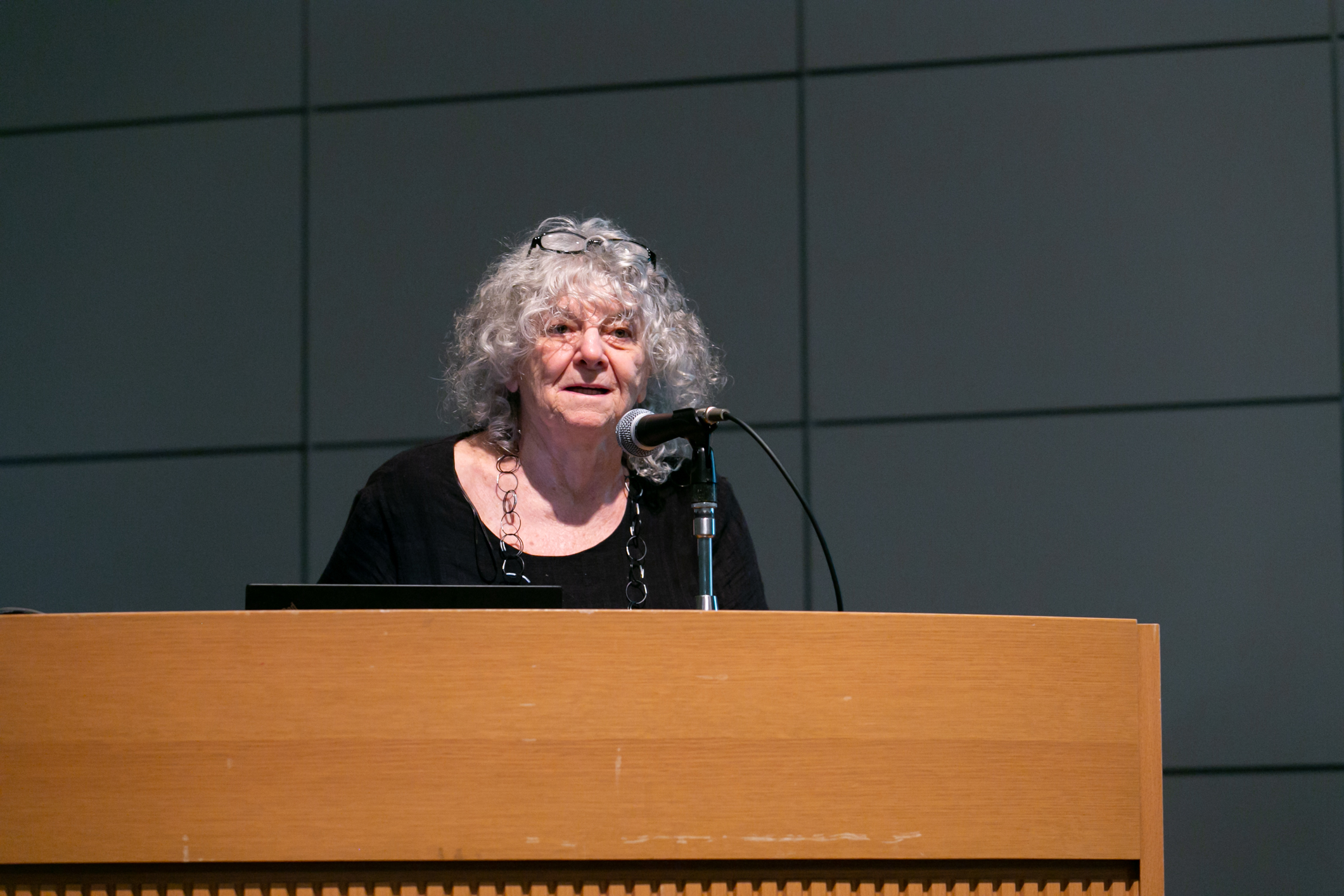
In 1970, Yonath established Israel’s first protein crystallography laboratory, which remained the country’s only laboratory of its kind for nearly a decade. By the late 1970s, she had set herself an even more daunting problem: determining the three-dimensional structure of the ribosome, the immense molecular machine inside every cell that translates genetic information into proteins.
The challenge was formidable. To study the ribosome using X-ray crystallography, researchers first needed to coax these huge, fragile and irregular structures into crystals. Leading laboratories had tried and failed. Yonath persisted. She and her collaborators made thousands upon thousands of attempts, developing new experimental techniques along the way, before producing crystals that could ultimately reveal the ribosome in extraordinary detail. “People called me a dreamer,” she later recalled.
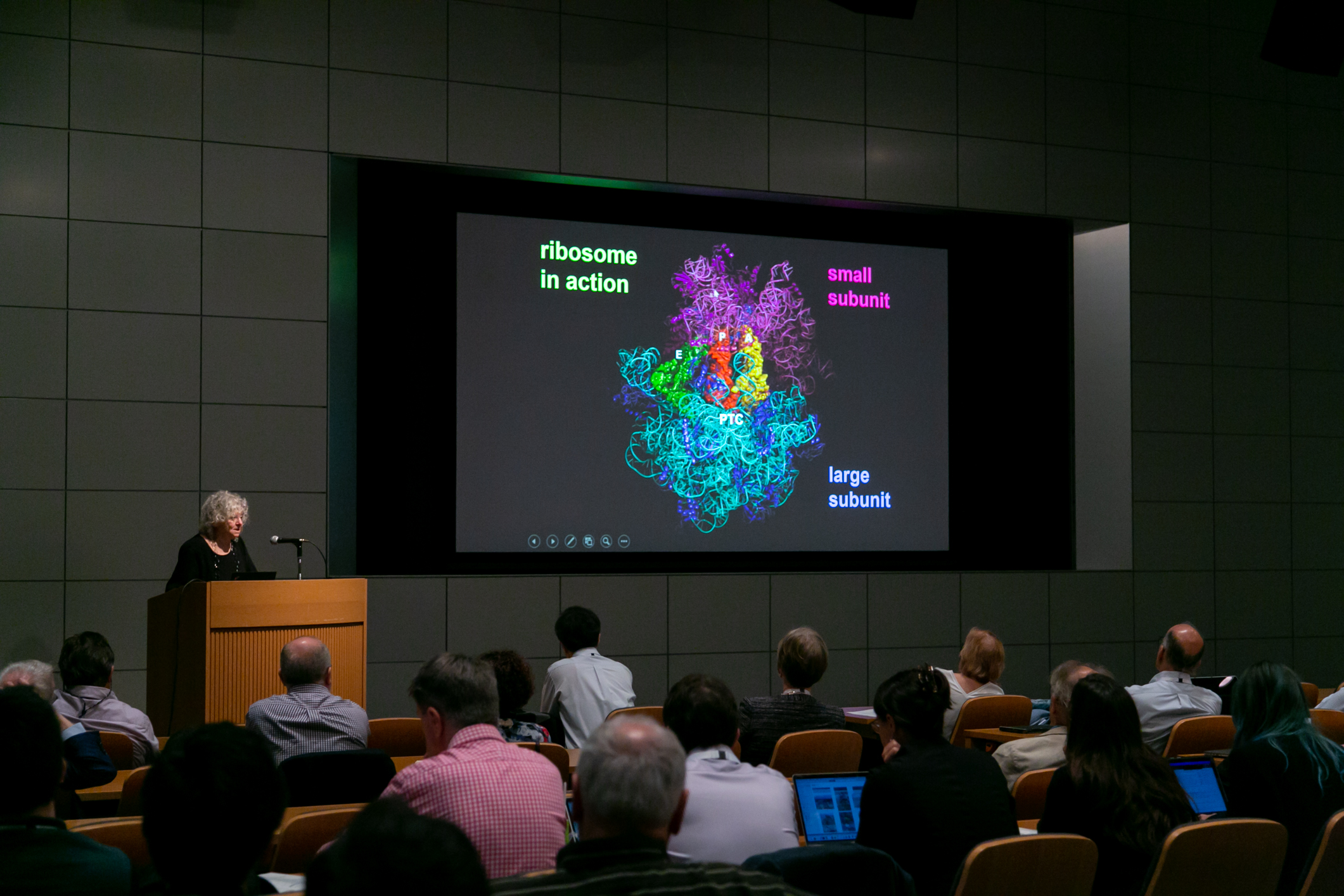
That dream reshaped biology. By 2000, Yonath and her colleagues had helped determine high-resolution structures of the ribosome’s two subunits. Her subsequent research helped reveal how important classes of antibiotics bind to bacterial ribosomes and disrupt their function, providing insights relevant to the development of new antibiotics and to the growing challenge of antimicrobial resistance. In 2009, Yonath became the first Israeli woman—and only the fourth woman ever—to receive the Nobel Prize in Chemistry, sharing the award with Thomas Steitz and Venkatraman Ramakrishnan “for studies of the structure and function of the ribosome.”
Her connection with HFSP had begun years earlier. In 2003, Yonath was a member of an HFSP Program Grant team with Tamar Schlick of New York University, Andres Jäschke of Heidelberg University and Isao Tanaka of Hokkaido University. Their project, “Novel functional RNAs and drug design by a multidisciplinary theoretical/experimental approach,” brought together researchers in structural biology, theoretical and computational science, and RNA chemistry. It was quintessentially HFSP: an international collaboration crossing disciplinary boundaries to tackle fundamental biological questions whose eventual implications could not be neatly predicted in advance.
Yonath’s landmark work on ribosomal structure was already well advanced by the time she received the HFSP grant. But her career illustrates a principle central to HFSP: fundamental research does not always announce its eventual usefulness. Understanding how a cellular machine works can, years later, illuminate how drugs act upon it and open possibilities no one envisioned when the original question was asked.
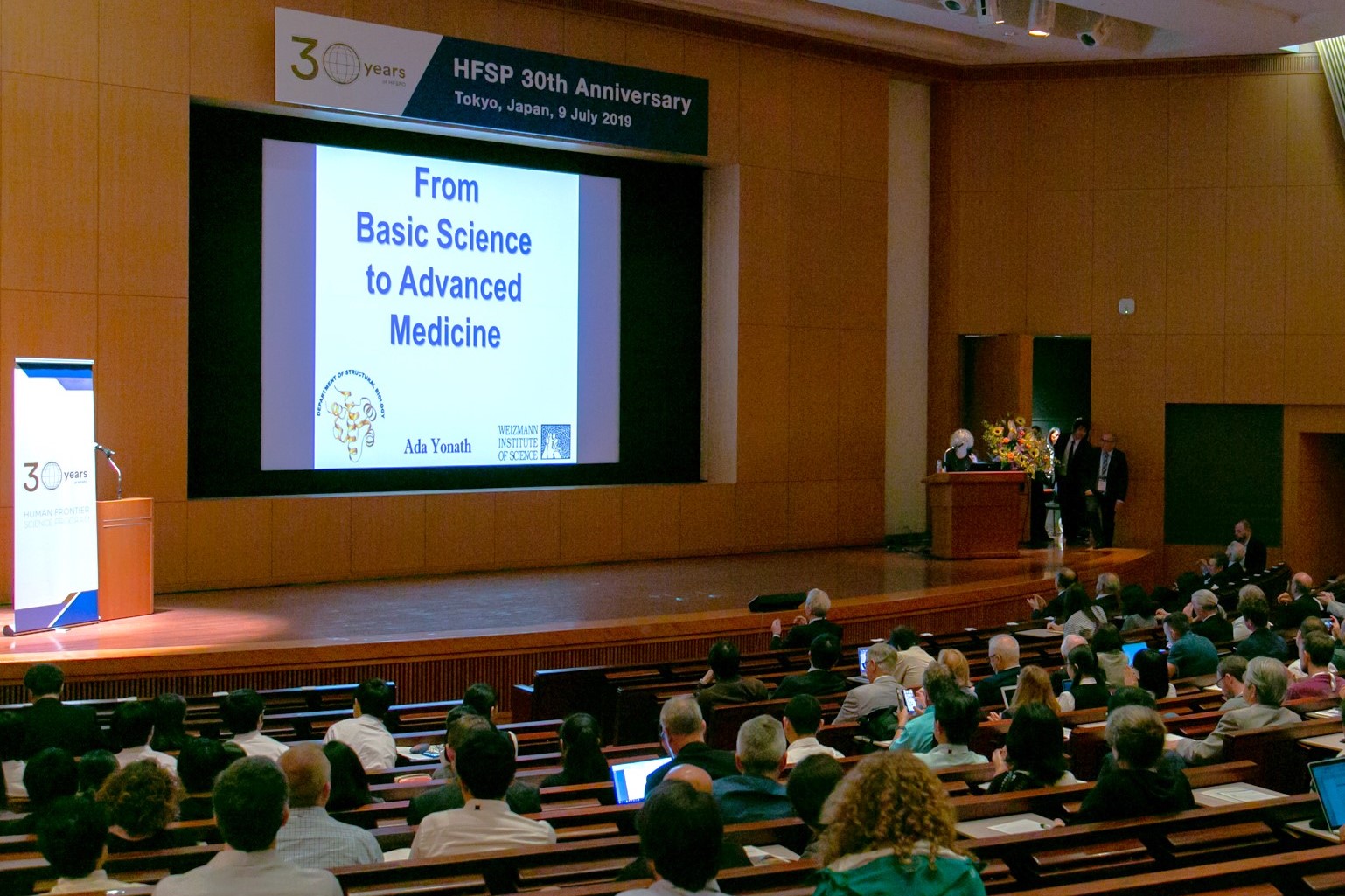
Nor did Yonath’s relationship with HFSP end with her grant. In 2019, she returned to Japan to help HFSP celebrate its 30th anniversary. Together with fellow Nobel laureates and HFSP alumni Tasuku Honjo and Jules Hoffmann, and former HFSPO Secretary-General Torsten Wiesel, she reflected on three decades of frontier life-science research. Her talk carried a title that encapsulated much of her own scientific journey: “From basic science to advanced medicine.”
In 2025, Yonath again joined the HFSP community in Japan, at the HFSP Science Summit, alongside several other fellow Nobel laureates with ties to HFSP, including Tim Hunt, Svante Pääbo, Frances Arnold, Paul Nurse, and Martin Chalfie.
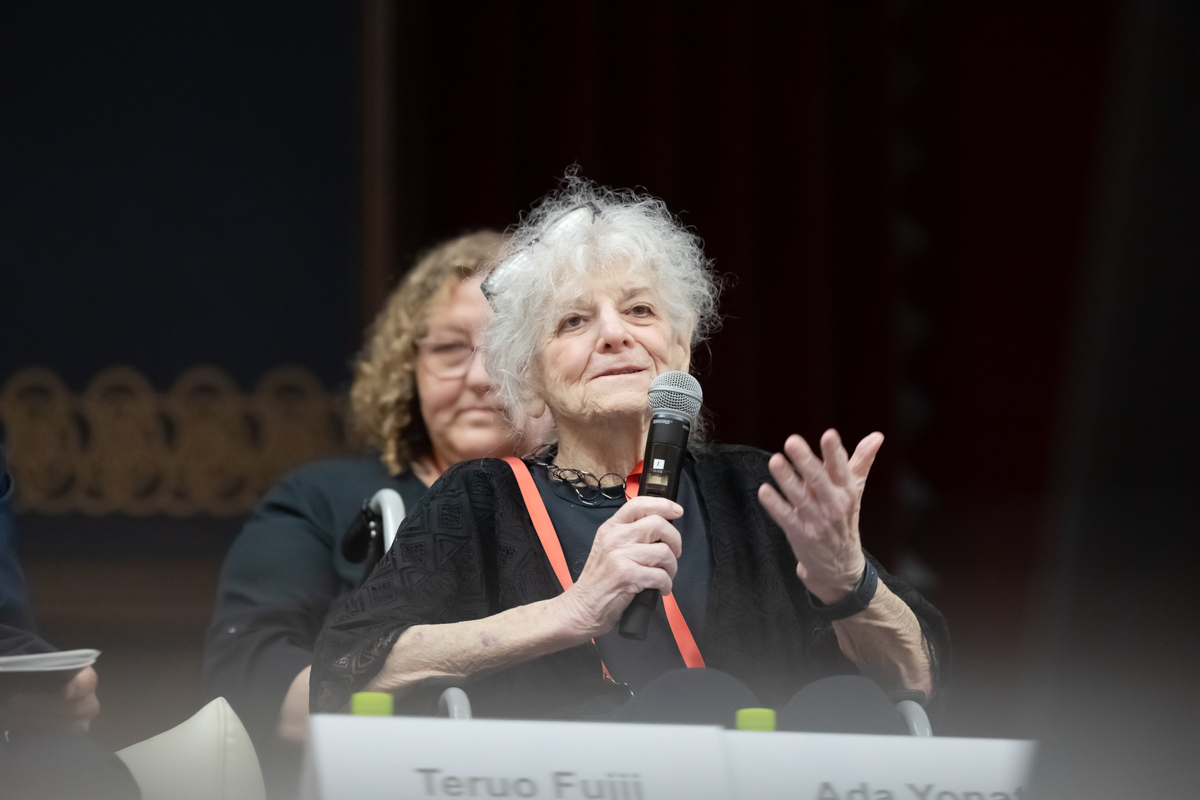
Pavel Kabat, HFSPO Secretary-General, fondly remembers a visit to Yonath’s laboratory in 2023. In her office, its walls covered nearly to the ceiling with scientific accolades and honors from around the world, the two talked about science, world affairs, friends and the family. “Then I asked her: Ada, please tell me, what are you working on these days?” Kabat recalls. “She gave me a strange look and said, ‘Oh, I really can’t tell you!’ I asked her why. After some hesitation she said: ‘I cannot tell you, because I am working on a research project proposal to HFSP.’ At that time, she was already close to 85!”
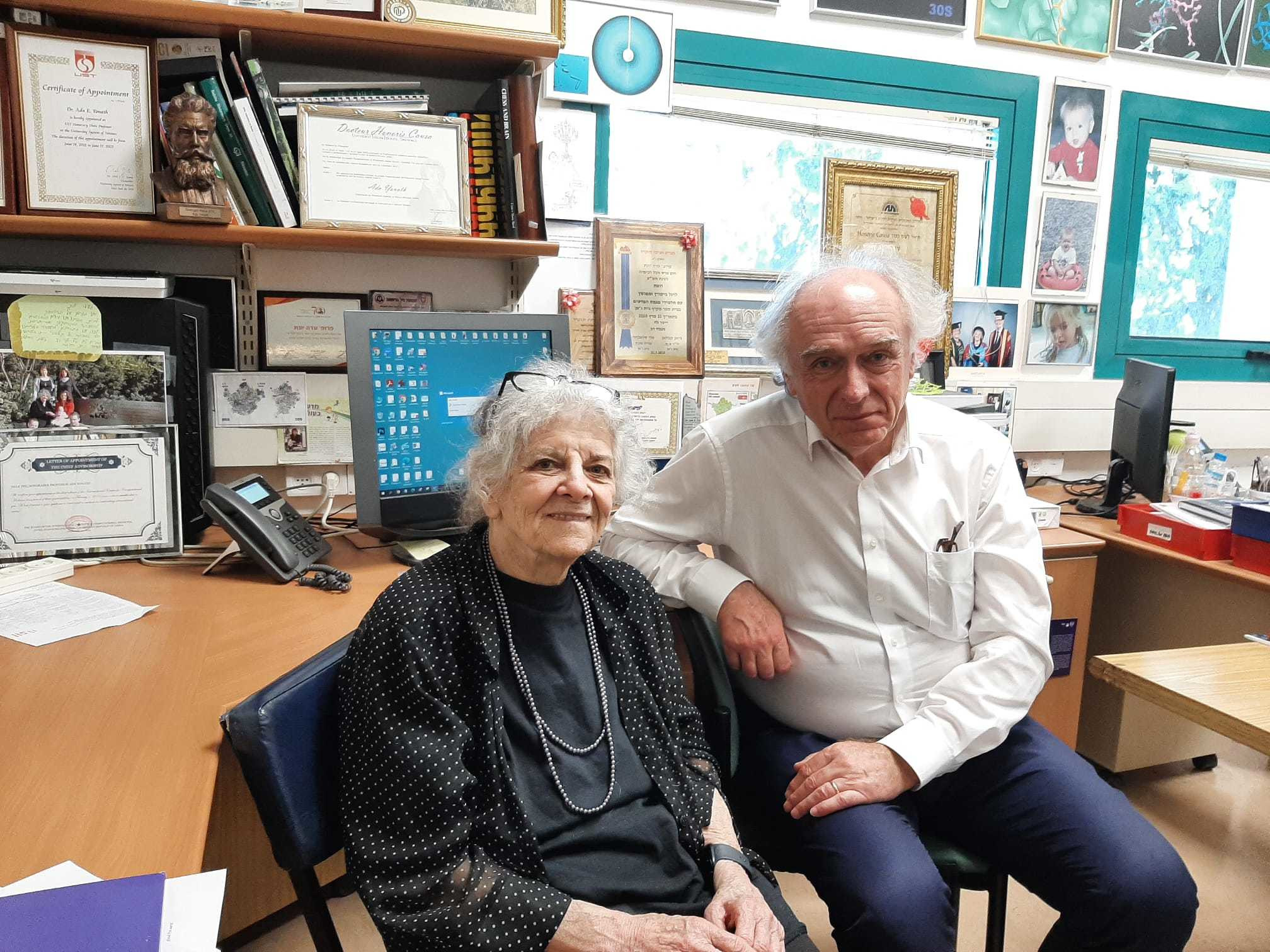
Yonath remained an active scientist remarkably late in life, always eager to explore new opportunities and try new avenues. The Weizmann Institute noted that she continued to publish research, lead an active laboratory and maintain scientific collaborations until her final days. In remembering her, Weizmann President Alon Chen described a scientist who “never hesitated to choose a path that others considered impossible.”
That may be the most fitting way for the HFSP community to remember Ada Yonath. Her discoveries changed our understanding of the machinery of life. Her example offered something equally enduring: a demonstration of what can happen when scientists are given the freedom—and summon the courage—to pursue difficult questions even when the outcome is uncertain.